Sri Sitaramdas
Omkarnath Dev
One of the most revered Hindu saints of twentieth-century India — scholar, poet, initiator, and tireless servant of the divine name.
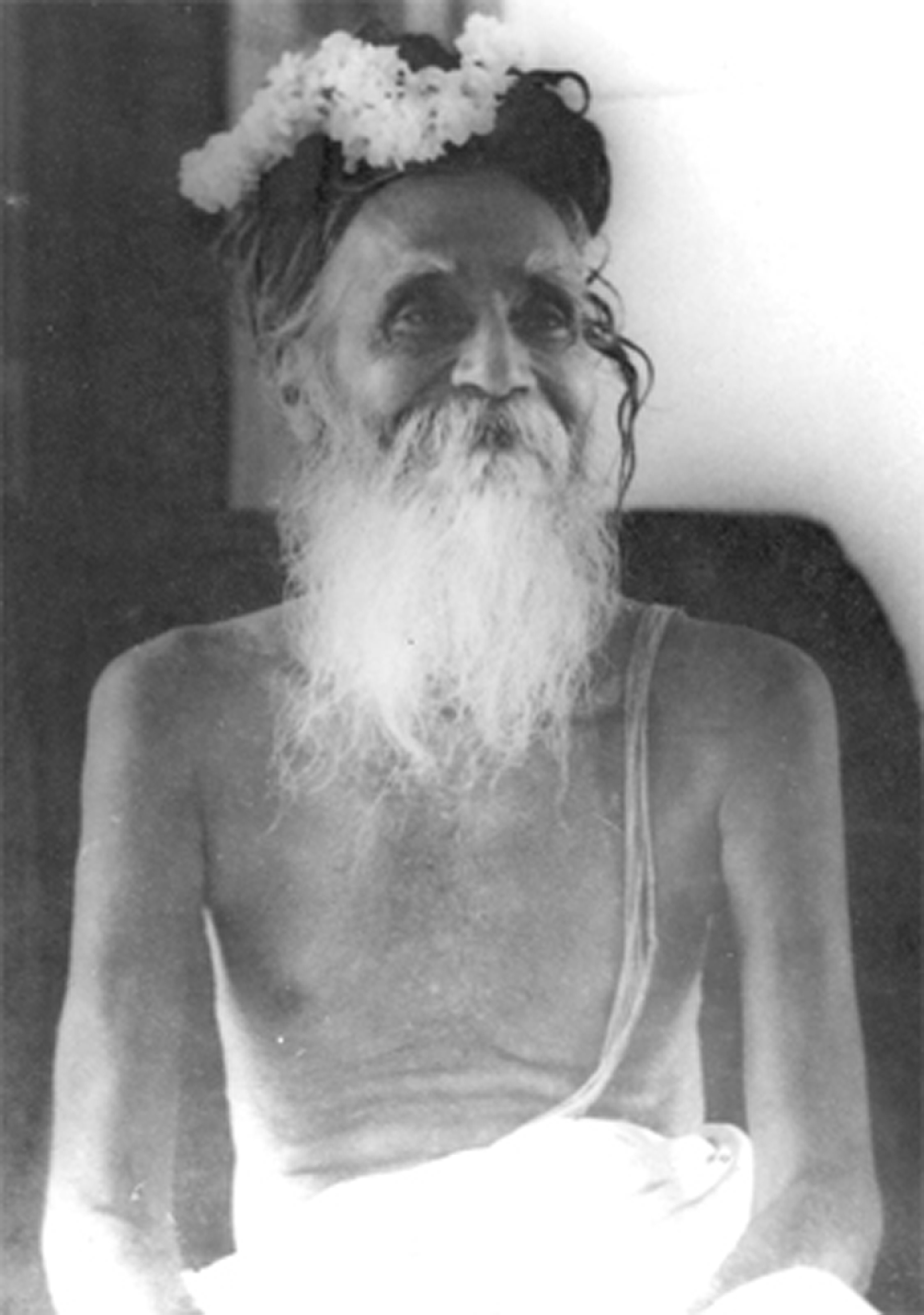
Sri Sitaramdas Omkarnath Dev
1892 – 1982
Saint, scholar,
divine servant.
Sri Sri Sitaramdas Omkarnath Dev stands as one of the most luminous spiritual figures of modern India, embodying both the timeless mysticism of the Rishis and the accessible compassion of a saint for ordinary men and women. His life is a tapestry of ardent spiritual discipline, compassion, and a mission rooted in simplicity: the chanting of the Holy Name.
He was at once a rigorous philosopher and a poet of rare lyrical power, composing devotional hymns in Bengali, Sanskrit, and Hindi that are still sung across Bengal and beyond. His philosophical works, collected under the rubric of Abhinava Pranavavāda, constitute a systematic and original contribution to the Indian philosophical tradition.
Unlike many teachers of his age, Sri Omkarnath Dev insisted that the divine name was not the property of any single sect or tradition — that Oṃ belongs to all, and that the path of nāma-japa is open to every sincere seeker, from scholar to the most ordinary person.
“Take the name of the Lord ceaselessly. There is nothing else. There is nothing else.”
— Sri Sitaramdas Omkarnath Dev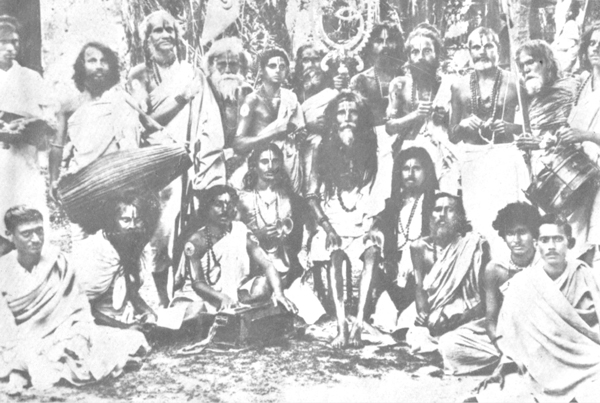
The Message of the Name.
Central to his teaching was the transformative power of the Divine Name. He insisted that spirituality need not be confined to ascetics or scholars; it was available to all through the simple repetition of God's Name. His prescription was clear: chant Hare Kṛṣṇa Hare Kṛṣṇa Kṛṣṇa Kṛṣṇa Hare Hare / Hare Rāma Hare Rāma Rāma Rāma Hare Hare. He emphasized that no austerities, renunciations, or rituals were necessary — mere mechanical repetition, even without faith, would suffice. The Name itself would purify, uplift, and ultimately liberate.
This radical accessibility distinguished him from many spiritual teachers. He democratized spirituality, making it available to the "meanest of men." Whether one was pure or impure, saintly or sinful, the Name was the path. In this way, Omkarnath Dev brought the Life Divine within reach of the common household, amidst the "madding crowd."
Hare Kṛṣṇa Hare Kṛṣṇa Kṛṣṇa Kṛṣṇa Hare Hare
Hare Rāma Hare Rāma Rāma Rāma Hare Hare
The Mahāmantra he particularly prescribedTrials and Miracles.
His life was not free of hardship. He endured grinding poverty, illness, and bereavement, yet remained serene and joyous. Anecdotes abound of his family fasting for days, yet treating hunger itself as communion with God. Even in destitution, he continued to host festivals, feed guests, and maintain worship — often with resources appearing miraculously at the right moment.
One striking incident occurred when, during his vow of silence at Puri in 1937, he resolved to renounce the body in Nirvikalpa Samādhi unless God appeared. Lord Jagannātha did appear, commanding him to spread the Name across the world. From then on, his mission was clear: to scatter the Name like seeds of bliss, filling the world with its resonance.
The Master as Teacher.
Omkarnath Dev lived the role of a traditional teacher. He established his own chatuspāṭhī (seminary), where students studied literature, poetics, philosophy, and history. His discourses were remembered as profound, original, and transformative. Yet his teaching was often interrupted by spontaneous samādhi, as he slipped effortlessly into communion with the Absolute. This duality — being both accessible and transcendent — defined his presence.
The Avatar of the Age.
Disciples and admirers saw in him not merely a saint but an Avatāra. Srimat Bhumananda Dev argued that while earlier incarnations of God descended to a lower stage to serve humanity, Omkarnath operated from the highest plane of the sacred syllable "Om" — the m sound, representing culmination. To call him merely an incarnation was, in Bhumananda's view, to diminish his stature. He was the "Avatar of Avatars," embodying the eternal promise of God's descent to restore Dharma.
Humanity and Divinity Interfused.
What made Omkarnath Dev so compelling was his seamless blend of humanity and divinity. He was simple as a child, playful, humorous, and approachable, yet baffling as the Sphinx, dissolving into samādhi in the midst of ordinary conversation. He welcomed sinners and saints alike, offering them direct experience of God without ritual or preparation. To stand before him was to be invited into the Infinite.
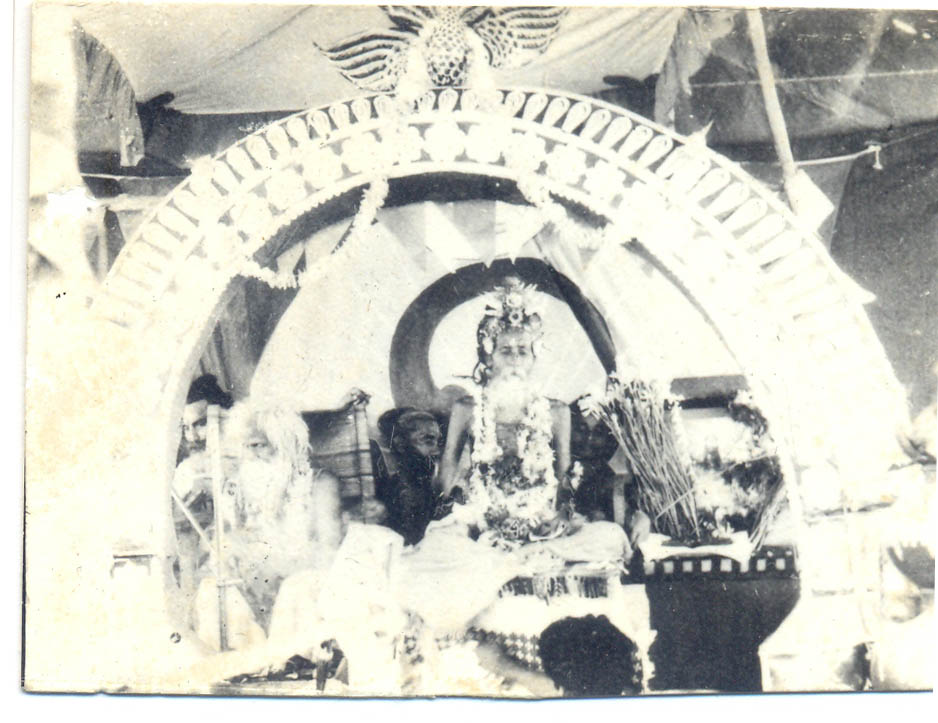
Srimat Bhumananda Dev's Invocation.
"This then is my forte. A common man as I am, I have a right to speak to common men all over the world and to deliver to them the message of a Master who is ours by inalienable right, who with one clear call urges upon all to hold fast to the Name and do nothing else. We have simply to repeat the Name, silently or aloud, at any time and place, with or without faith, caring nothing for holiness of body or mind. Mere mechanical muttering or simple parrot-like chanting will suffice. We need not worry about the \"how\" of it (the Master does of course explain the logic or science of it): in course of time we will realize both its rationale and its efficacy. Practice explains the process. Meanwhile, let us but take to the Name and keep to it as far as we can. This is the Master's plain practicable message for us. This is how we can attain Perfection. It will fetch us material prosperity, if that is what we covet, or spiritual Bliss, knowledge of Truth, merger with the Infinite, should that be our aim. The Master pledges his word for it and you know he never speaks in vain, nor has he an axe to grind. All that he wishes is Joy for you and me, Joy for everybody. Any Name will do, but the Name that he particularly recommends is:"
Hare Krishna Hare Krishna Krishna Krishna Hare Hare
Hare Rama Hare Rama Rama Rama Hare Hare
"This is the Name he prescribes. All that you require to do is to utter it, repeat it, every moment or as long and as often as you can. Chant it loud or hymn it within. Repeat it when you stand or sit, work or walk, eat or go to bed. Repeat it when you are pure at heart and when you are not. You need not care for the body's dirt or the mind's filth. But perhaps this is too much for you. Perhaps you find it hard to utter the Name. Well, then listen to the Name when it is chanted by others. Is even this beyond your capacity? Be only delighted when others sing the Name and you shall be gratified. This is the Master's gospel. He has brought spirituality well within the access of the meanest of men. He does not want you to change your way of life. He prescribes no austerities, he imposes no restrictions. Go your own way, live as you do — with only the Name on your lips. The Name will do what is good for you. You are not to renounce anything: what ought to be renounced will itself drop from you. You are not to repress your base instincts or abstain from bad habits. You have not to abandon your relations, nor need you fly to the woods. You will attain easily to the summit of spiritual realization while you live normally in the midst of the madding crowd. Here indeed is the Life Divine made easy and available for all by the Master."
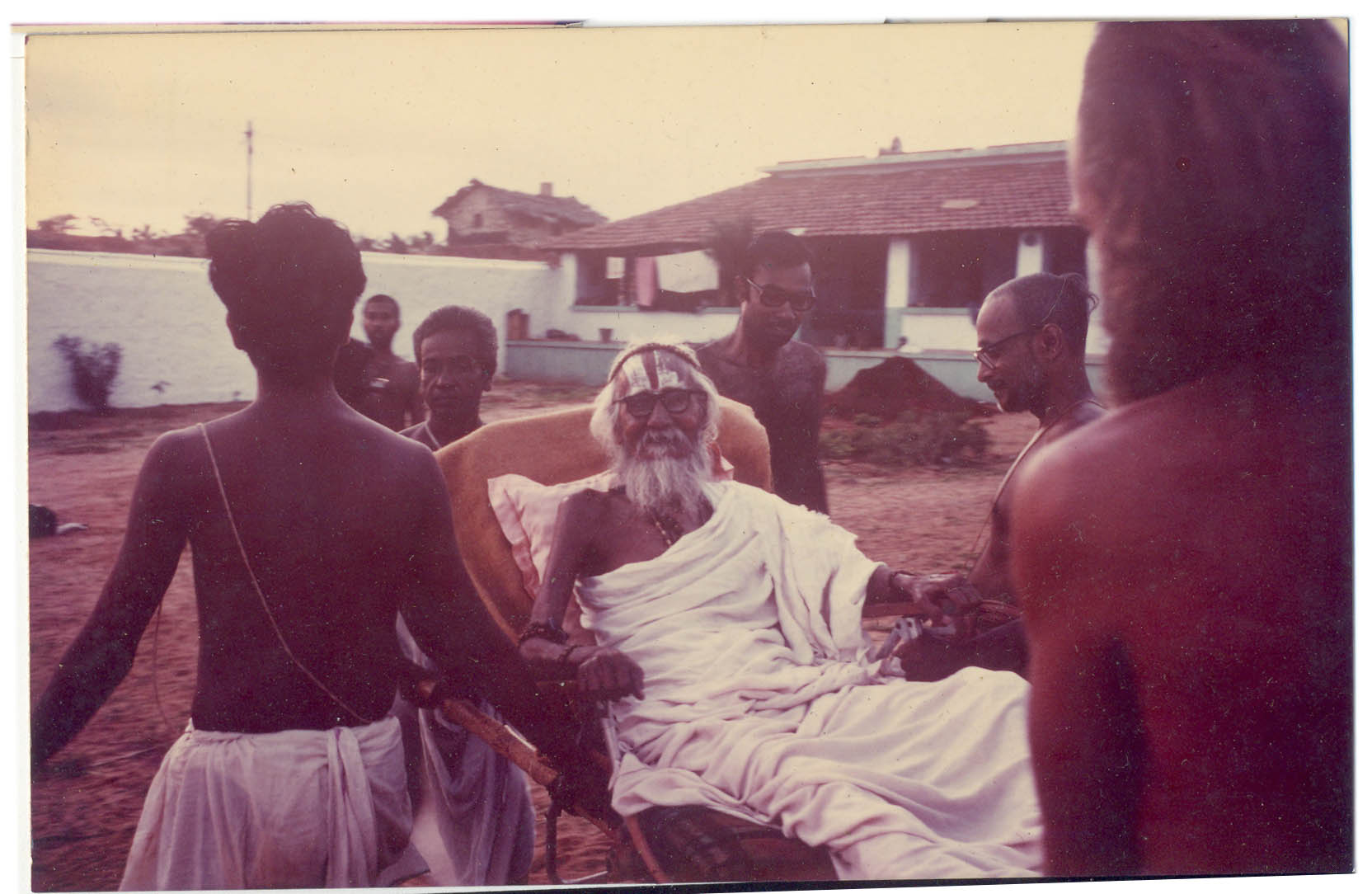
"So the Master is for us, common men and women, and it is only proper that a very common man should write about him. I overcome my misgivings therefore to proceed in all humility to my work. It is bound to have many imperfections and no work on the Master can aspire to be a substitute for the Master. All that a book can do is to invite attention to him. This monograph too is a warm invitation to believers in spiritual values as well as to unbelievers, skeptics and materialists to visit the Master and have a sight of him who is a living vindication of spiritual values, a living affirmation of the eternal truth of the Life Divine."
"But supposing spiritual values do exist, why should they be any part of our concern? May we not safely leave them aside and live our own lives on earth without being any the worse for this abjuration? Does not a life divine prove a misfit in the practical field? Does it not amount to an abstraction from the world at large? To questions such as these — and they are pertinent of course — the best answer is a contact with the Master, a first-hand experience of what he is and stands for. If spiritual enlightenment has any significance, that is because it has a positive utility for our mundane everyday existence too. Who would bother about spiritual fulfilment, unless it contributed to, and enriched substantially, the daily life of man on the material plane? It is a travesty of spirituality that proposes to substitute a cold other-worldly phantom of a hypothetical perfection for the warm palpitating facts of immediate material life. If spiritual values deserve to be cultivated, that is because they have a way of rendering you fitter for worldly existence. The Master, for one, is out chiefly to turn his disciples and devotees into competent men and women of the world. The light that he diffuses, the wisdom that he instils, adds to our efficiency even in the practical sphere. A mystic of fact is a very different being from the airy visionary of popular conception. He is more of a realist than our so-called earth-bound realists are. A mystic of fancy is a butterfly: a realist of the usual brand is an earthworm. The true mystic is neither: he is an eagle. One definition of mysticism, a universally accepted one in our sacred texts, is fitness for work of every kind. Spirituality means competence. To be master of self is to be master of the universe. To realize the ideal is not merely to idealize the real but also to realize the real. The Idealist in the true sense is the realist in the higher as also the limited sense. To exclude spirituality from life is to attenuate reality; it is to wither life away."
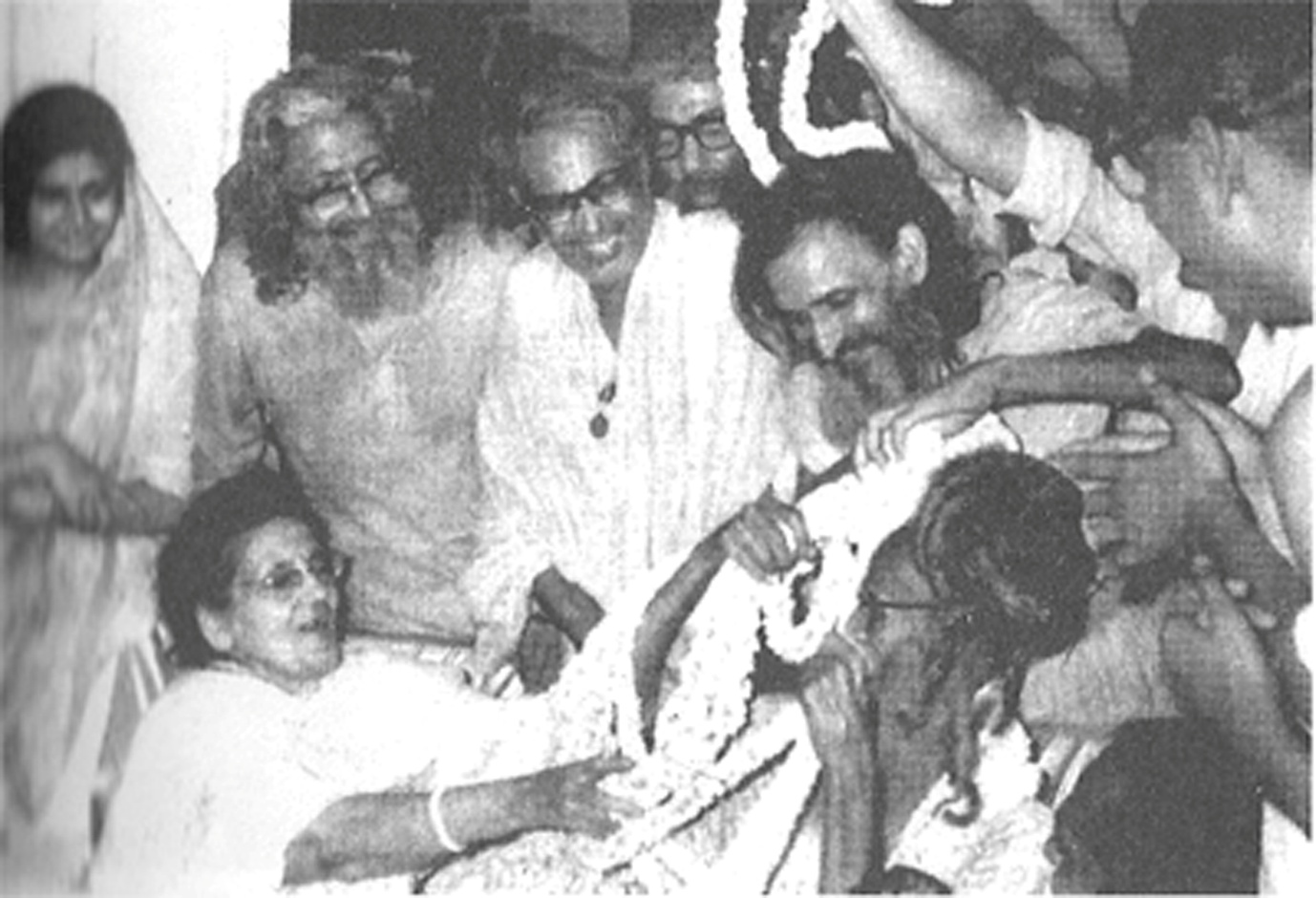
"I have often noted with pain that a Master's life is made Renown and his message preached after he has ceased to live in the flesh. So long as he lives in our sense of the word, he is known to a privileged few who jealously guard the secret of his advent and cherish it as a sacred treasure not to be disclosed to the profane multitude. They shut out information about him and that with good reason. For one thing, publicity involves the risk of cheapening the Master and his message. It is not for all to appreciate; some want the capacity, some even the temperament, to appreciate. Some look askance, some cast aspersion and wound the susceptibilities of disciples, who choose therefore to be reticent. There is, besides, the risk of misrepresenting the Master, of belittling his transcendent glory, which is also why discreet silence on a Master is the rule. The result is that the world cannot benefit directly by the Master's presence. He comes to be the monopoly of a coterie. The whole point however about a Master's advent is that we can have his grace directly and tangibly, we can have it in both hands and feed on it. It little profits to be told that a Master came but is no more. It amounts to a cruel joke. It may be of some profit to be told that a Master is there whom you can approach to have our torch lighted and your spirit vitalized."
"There are Masters of course who elect to isolate themselves, who cannot or will not make themselves available to us. Of them no information can or need be given. But of a Master like mine who is not shy or afraid of meeting men and raising them, who welcomes sinners as well as saints and encourages them equally to fill their pail at his spring, who having tasted ambrosia and been saturated in it invites us to taste of it too — of such a one surely it is a crime to withhold information. Not to write about the Master is to defraud the world. And fortunately to write about him is safe enough in that one cannot minimize him any more than one can magnify him. There is a stage to be poised on which is to be at once the greatest of the great and the smallest of the small — 'Mahatomohian' and 'Anoronian.' And it is there that the Master stands. Knowing it as I do, I can proceed to my task with an easy heart. At this moment I recall the words of the Ecclesiastes: 'Of the writing of books there is no end and too much reading is weariness of flesh.' Words truer than these cannot be spoken. Yet this bad little book (this I can easily anticipate) on a vast noble subject I venture to write with the humble hope that it may be of some use to the weary world. It may be of help to know that there is a spring yet that flows in this arid desert that we find around us, to this spring may come any that chooses and slake his thirst. It may perhaps be heartening to know that Peace can be ours and Joy too, that Bliss waits to be plucked, that the road to Fulfilment is smooth and straight and for all to take, for even the maimed and the halt. It is good perhaps to be merely informed of the Master's message which is a refreshing contrast to the usual belief that it is a steep and thorny way for the elect alone to try. It may probably be reassuring to know that there is a Master who in his infinite mercy gives us a primrose path to bliss eternal and invites us warmly to make the pilgrimage."
— Srimat Bhumananda Dev (Prof. Sadānanda Chakrabarti), Introduction to "Our Master"
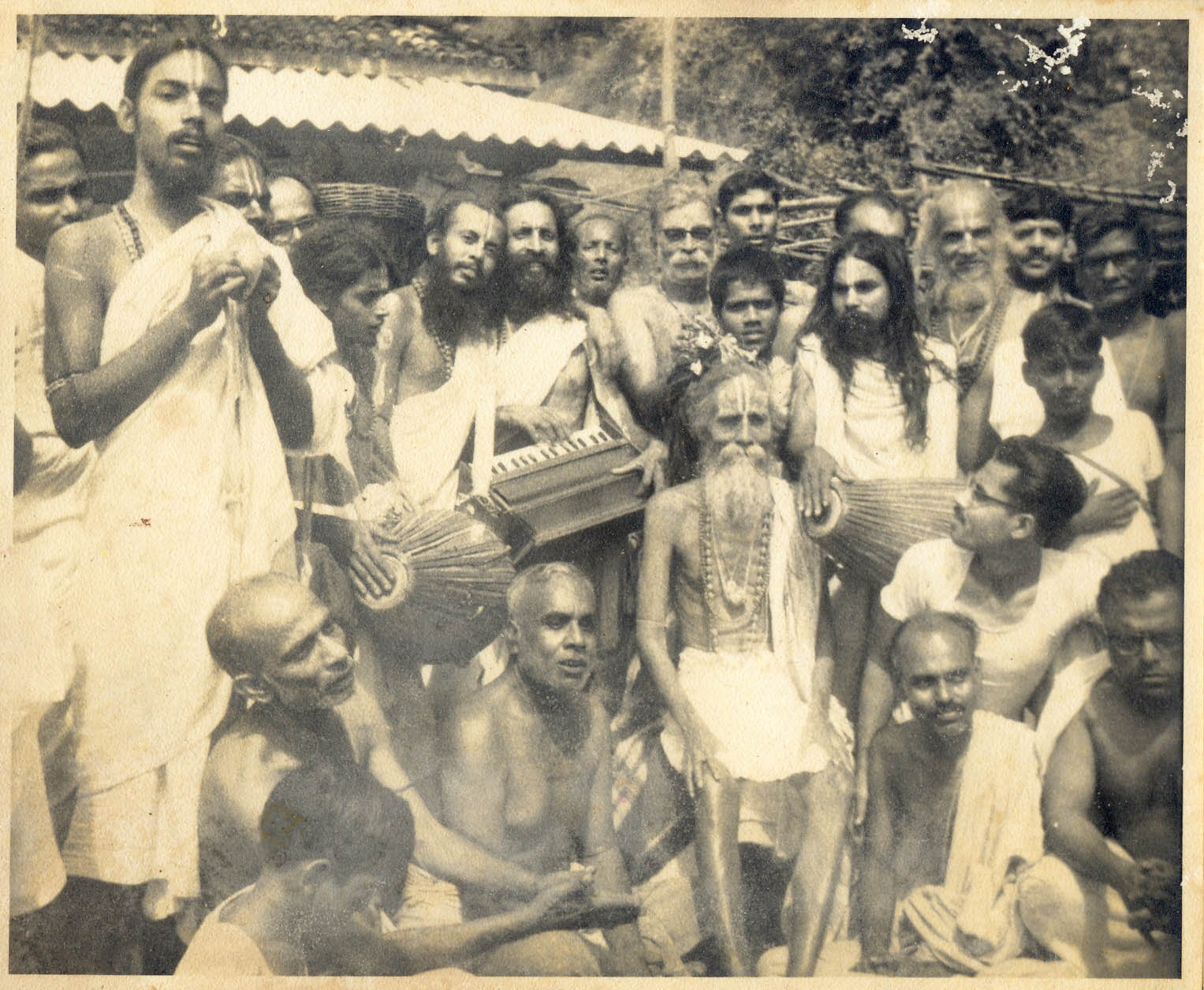
Legacy and Mission.
Sri Sri Sitaramdas Omkarnath Dev's legacy lies in his message of simplicity and universality. He showed that spirituality is not an abstraction but a practical force that enriches daily life. His insistence on the Name as the royal road to fulfilment continues to inspire seekers, offering a path that requires no renunciation of worldly duties.
"Not to write about the Master is to defraud the world," wrote Bhumananda Dev — and indeed the literature he left behind, the communities of seekers who continue his work, and the living practice of nāma-japa transmitted through his lineage all testify to a mission that has not ceased. The spring of grace he opened continues to flow.
"It may be heartening to know that Peace can be ours and Joy too, that Bliss waits to be plucked, that the road to Fulfilment is smooth and straight and for all to take, for even the maimed and the halt. There is a Master who in his infinite mercy gives us a primrose path to bliss eternal and invites us warmly to make the pilgrimage."
A life of divine service.
Birth in Dumurdaha, Hooghly
Born in Dumurdaha, Hooghly district of Bengal, Sri Sitaramdas Omkarnath showed extraordinary spiritual inclinations from the earliest age. At the age of six he saw Lord Śiva standing outside his window, vividly describing the deity's form to his father before the vision vanished.
Divine Initiation
As a young student in Chinsura he again encountered Śiva, who revealed himself as his Guru and imparted the sacred mantra. These visions culminated in a profound realization during Dol Pūrṇimā in 1918, when Omkarnath became fully aware of his divine mission: to restore Dharma whenever it declined.
Revelation of Mission
On Dol Pūrṇimā 1918, the full awareness of his divine mission crystallized — to restore Dharma whenever it declines, in fulfillment of the Gītā's promise: "Sambhavāmi yuge yuge" — "I shall be born from age to age."
Vow at Puri — Lord Jagannātha's Command
During a vow of silence at Puri in 1937, he resolved to renounce the body in Nirvikalpa Samādhi unless God appeared. Lord Jagannātha appeared and commanded him to spread the Name across the world. From that moment his mission was unambiguous: to scatter the Name like seeds of bliss.
Nama Prachara — Spreading the Teaching
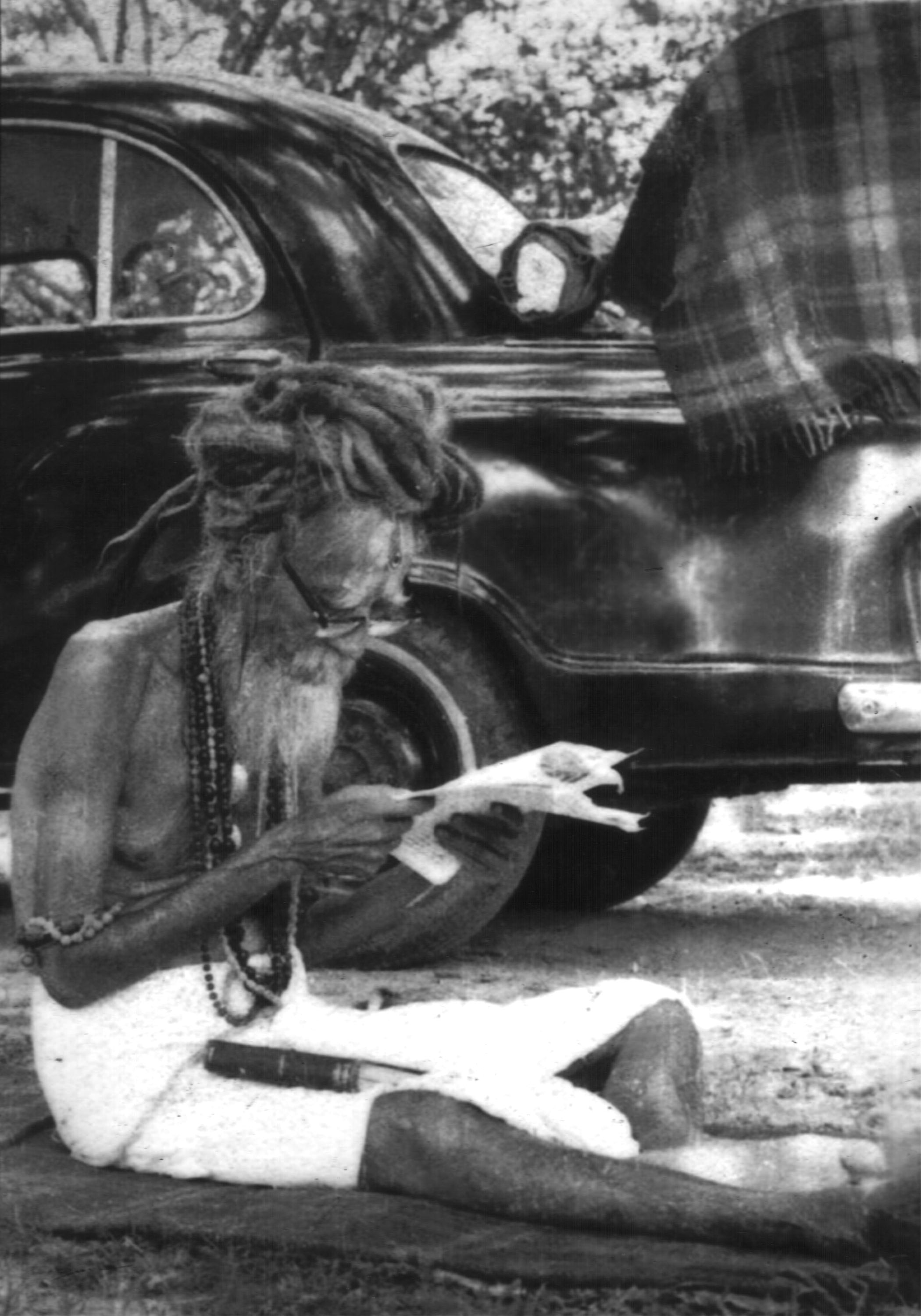
He travelled across Bengal and India, initiating thousands into the practice of nāma-japa. He established his own chatuspāṭhī (seminary) where students studied literature, poetics, philosophy, and history. His universal message — that the divine name transcends all sectarian divisions — attracted followers from every walk of life.
Mahāsamādhi
Sri Sitaramdas Omkarnath entered Nitya Leela Pravesha on the 31st of December 1982, having spent ninety years as a tireless servant of the divine name. His legacy continues to inspire millions worldwide.